Summary
Suicide is when someone dies as a result of intentionally ending their own life. Someone may have thoughts about suicide when they are experiencing overwhelming emotional pain, hopelessness or feel that they cannot cope with what is happening in their life. These thoughts can happen for many different reasons, including mental health difficulties, trauma, relationship problems, bullying, bereavement, abuse, loneliness or feeling trapped in a difficult situation.
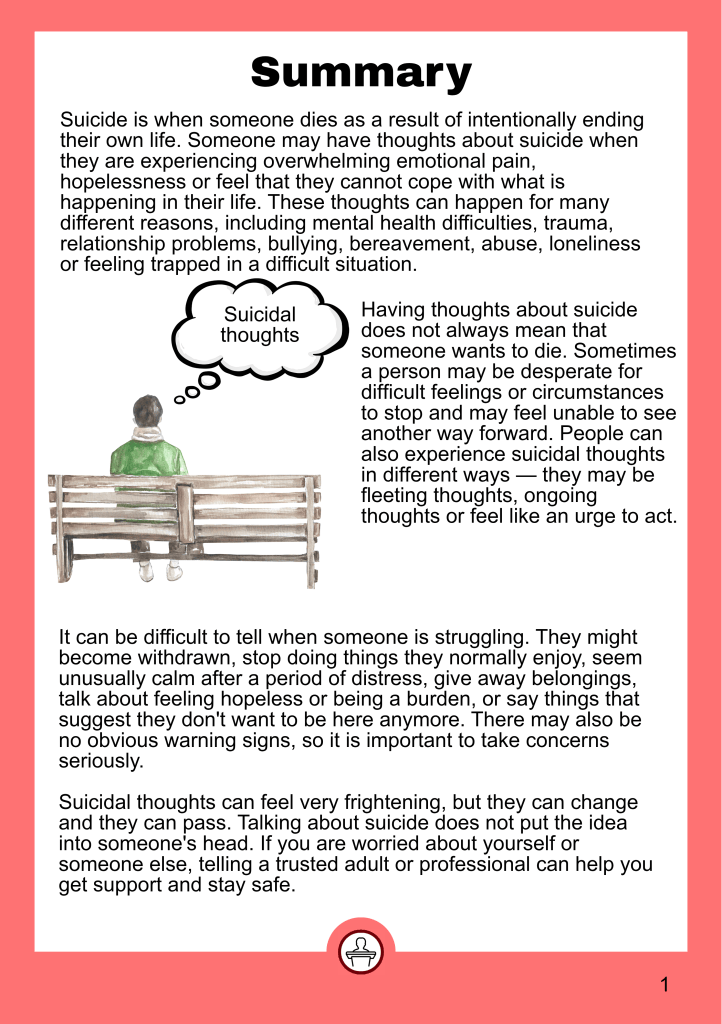
Having thoughts about suicide does not always mean that someone wants to die. Sometimes a person may be desperate for difficult feelings or circumstances to stop and may feel unable to see another way forward. People can also experience suicidal thoughts in different ways — they may be fleeting thoughts, ongoing thoughts or feel like an urge to act.
It can be difficult to tell when someone is struggling. They might become withdrawn, stop doing things they normally enjoy, seem unusually calm after a period of distress, give away belongings, talk about feeling hopeless or being a burden, or say things that suggest they don’t want to be here anymore. There may also be no obvious warning signs, so it is important to take concerns seriously.
Suicidal thoughts can feel very frightening, but they can change and they can pass. Talking about suicide does not put the idea into someone’s head. If you are worried about yourself or someone else, telling a trusted adult or professional can help you get support and stay safe.
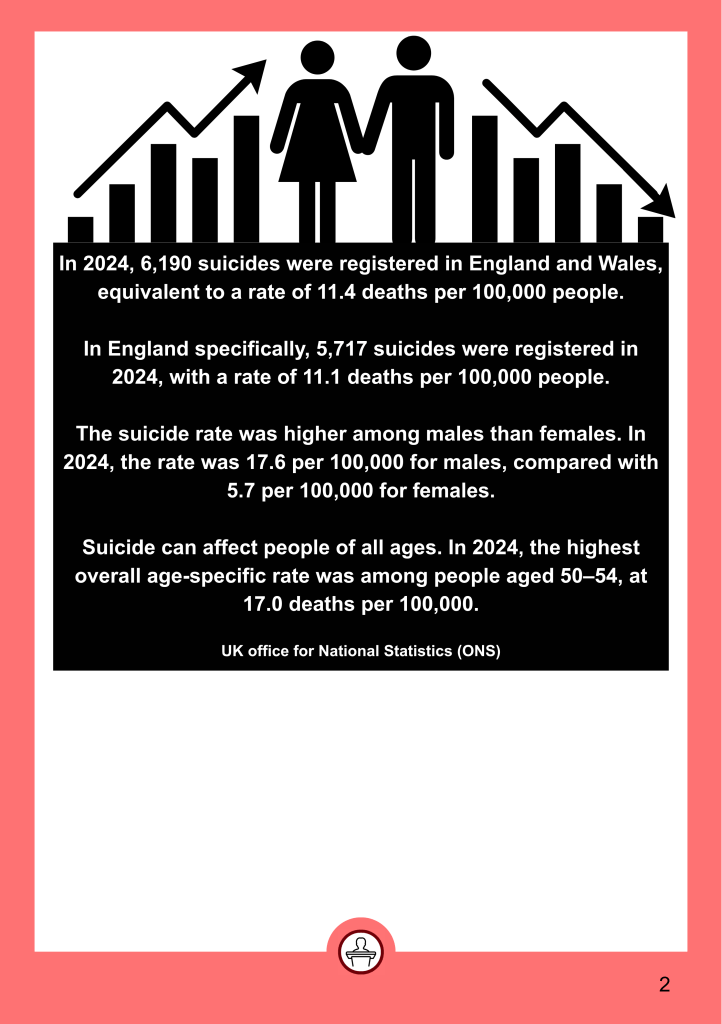
- In 2024, 6,190 suicides were registered in England and Wales, equivalent to a rate of 11.4 deaths per 100,000 people.
- In England specifically, 5,717 suicides were registered in 2024, with a rate of 11.1 deaths per 100,000 people.
- The suicide rate was higher among males than females. In 2024, the rate was 17.6 per 100,000 for males, compared with 5.7 per 100,000 for females.
- Suicide can affect people of all ages. In 2024, the highest overall age-specific rate was among people aged 50–54, at 17.0 deaths per 100,000.
UK office for National Statistics (ONS)
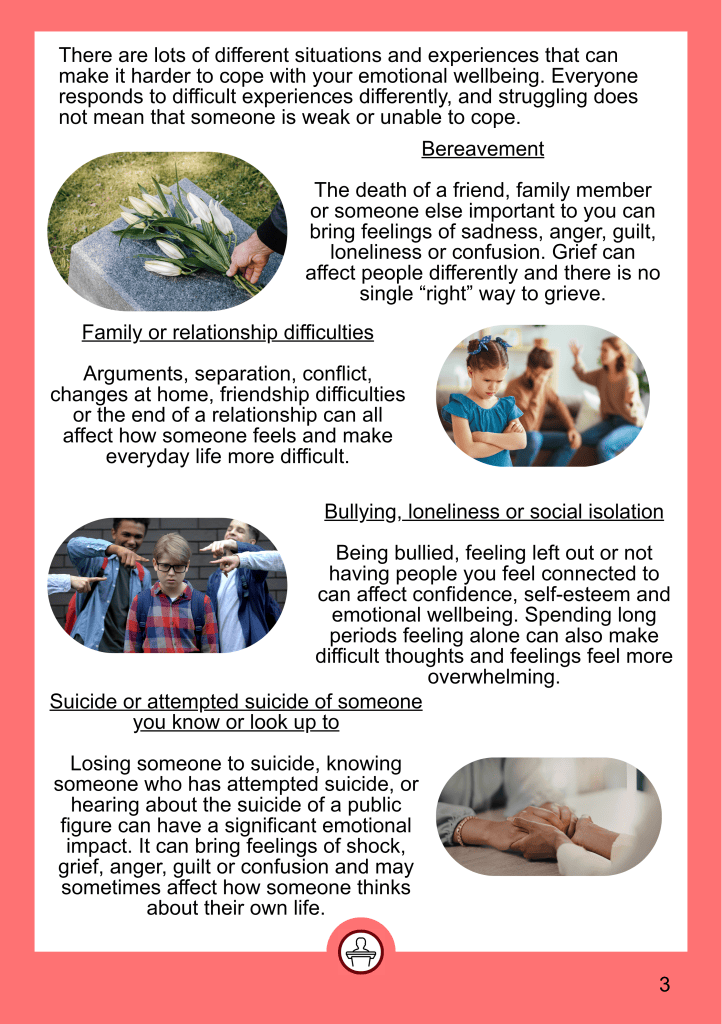
There are lots of different situations and experiences that can make it harder to cope with your emotional wellbeing. Everyone responds to difficult experiences differently, and struggling does not mean that someone is weak or unable to cope.
- Bereavement – The death of a friend, family member or someone else important to you can bring feelings of sadness, anger, guilt, loneliness or confusion. Grief can affect people differently and there is no single “right” way to grieve.
- Family or relationship difficulties – Arguments, separation, conflict, changes at home, friendship difficulties or the end of a relationship can all affect how someone feels and make everyday life more difficult.
- Bullying, loneliness or social isolation – Being bullied, feeling left out or not having people you feel connected to can affect confidence, self-esteem and emotional wellbeing. Spending long periods feeling alone can also make difficult thoughts and feelings feel more overwhelming.
- Suicide or attempted suicide of someone you know or look up to – Losing someone to suicide, knowing someone who has attempted suicide, or hearing about the suicide of a public figure can have a significant emotional impact. It can bring feelings of shock, grief, anger, guilt or confusion and may sometimes affect how someone thinks about their own life.
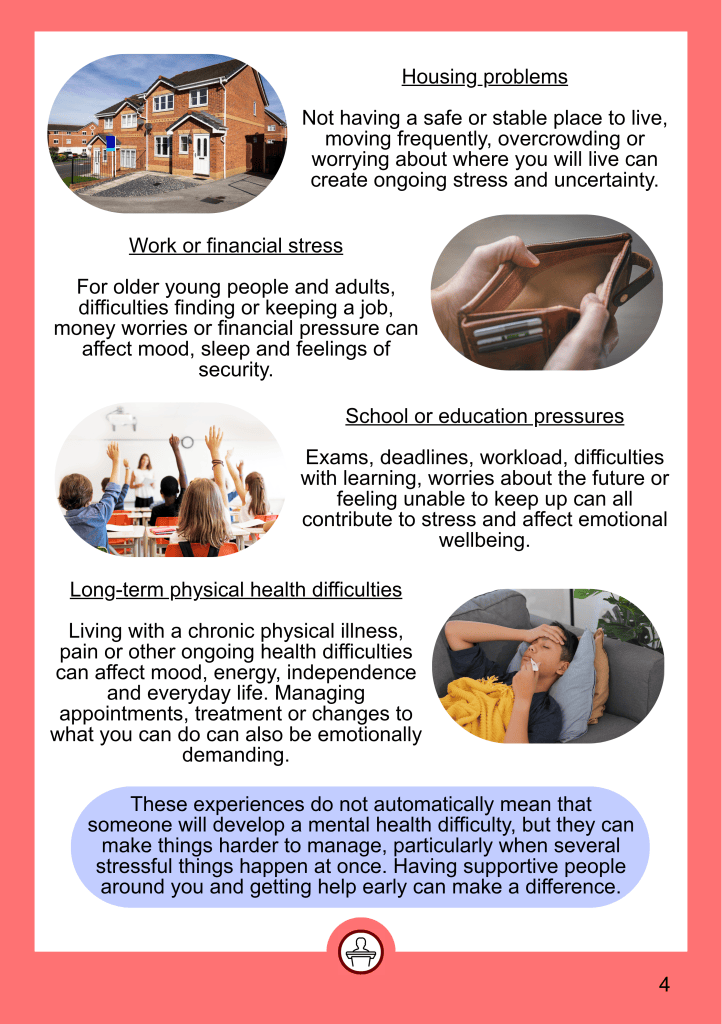
- Housing problems – Not having a safe or stable place to live, moving frequently, overcrowding or worrying about where you will live can create ongoing stress and uncertainty.
- Work or financial stress – For older young people and adults, difficulties finding or keeping a job, money worries or financial pressure can affect mood, sleep and feelings of security.
- School or education pressures – Exams, deadlines, workload, difficulties with learning, worries about the future or feeling unable to keep up can all contribute to stress and affect emotional wellbeing.
- Long-term physical health difficulties – Living with a chronic physical illness, pain or other ongoing health difficulties can affect mood, energy, independence and everyday life. Managing appointments, treatment or changes to what you can do can also be emotionally demanding.
These experiences do not automatically mean that someone will develop a mental health difficulty, but they can make things harder to manage, particularly when several stressful things happen at once. Having supportive people around you and getting help early can make a difference.
How to help myself
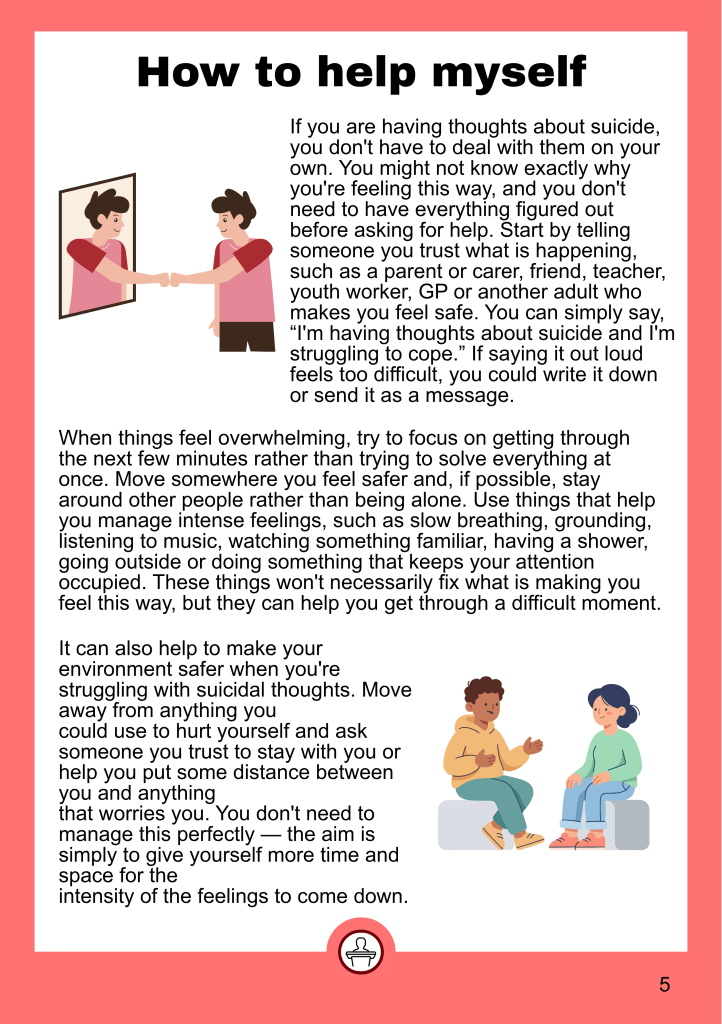
If you are having thoughts about suicide, you don’t have to deal with them on your own. You might not know exactly why you’re feeling this way, and you don’t need to have everything figured out before asking for help. Start by telling someone you trust what is happening, such as a parent or carer, friend, teacher, youth worker, GP or another adult who makes you feel safe. You can simply say, “I’m having thoughts about suicide and I’m struggling to cope.” If saying it out loud feels too difficult, you could write it down or send it as a message.
When things feel overwhelming, try to focus on getting through the next few minutes rather than trying to solve everything at once. Move somewhere you feel safer and, if possible, stay around other people rather than being alone. Use things that help you manage intense feelings, such as slow breathing, grounding, listening to music, watching something familiar, having a shower, going outside or doing something that keeps your attention occupied. These things won’t necessarily fix what is making you feel this way, but they can help you get through a difficult moment.
It can also help to make your environment safer when you’re struggling with suicidal thoughts. Move away from anything you could use to hurt yourself and ask someone you trust to stay with you or help you put some distance between you and anything that worries you. You don’t need to manage this perfectly — the aim is simply to give yourself more time and space for the intensity of the feelings to come down.
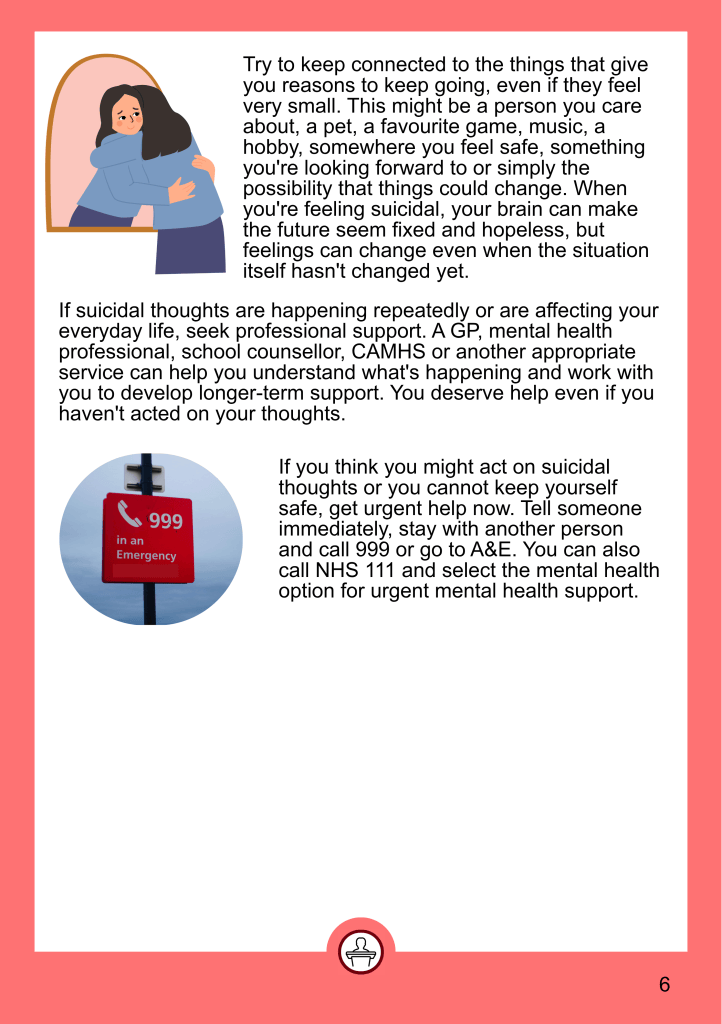
Try to keep connected to the things that give you reasons to keep going, even if they feel very small. This might be a person you care about, a pet, a favourite game, music, a hobby, somewhere you feel safe, something you’re looking forward to or simply the possibility that things could change. When you’re feeling suicidal, your brain can make the future seem fixed and hopeless, but feelings can change even when the situation itself hasn’t changed yet.
If suicidal thoughts are happening repeatedly or are affecting your everyday life, seek professional support. A GP, mental health professional, school counsellor, CAMHS or another appropriate service can help you understand what’s happening and work with you to develop longer-term support. You deserve help even if you haven’t acted on your thoughts.
If you think you might act on suicidal thoughts or you cannot keep yourself safe, get urgent help now. Tell someone immediately, stay with another person and call 999 or go to A&E. You can also call NHS 111 and select the mental health option for urgent mental health support.
How to help a loved one
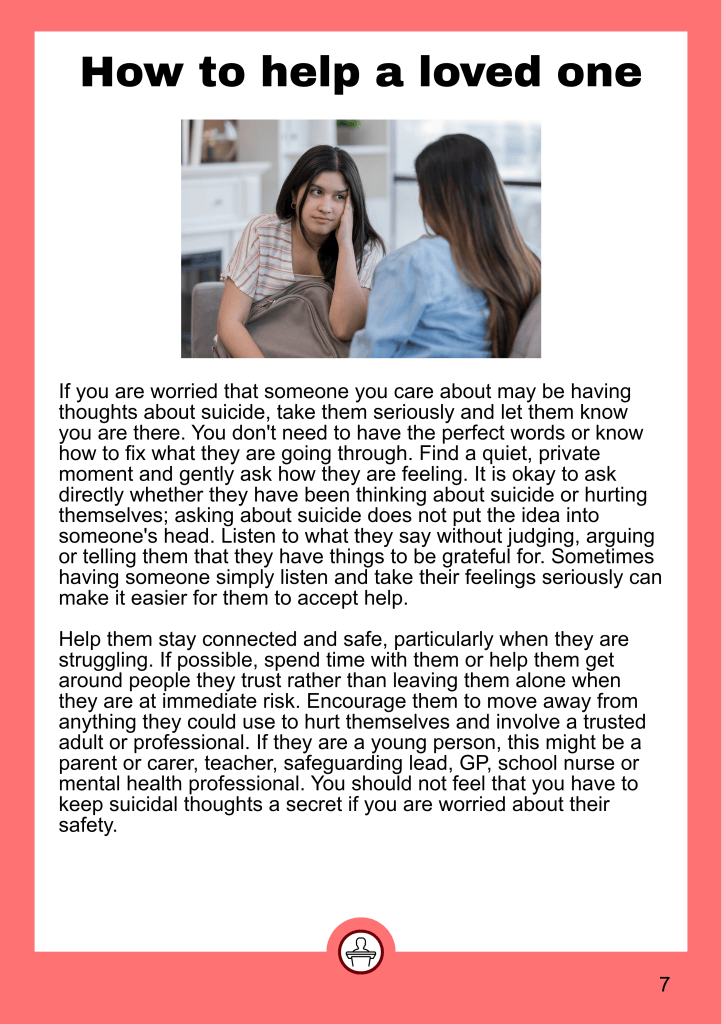
If you are worried that someone you care about may be having thoughts about suicide, take them seriously and let them know you are there. You don’t need to have the perfect words or know how to fix what they are going through. Find a quiet, private moment and gently ask how they are feeling. It is okay to ask directly whether they have been thinking about suicide or hurting themselves; asking about suicide does not put the idea into someone’s head. Listen to what they say without judging, arguing or telling them that they have things to be grateful for. Sometimes having someone simply listen and take their feelings seriously can make it easier for them to accept help.
Help them stay connected and safe, particularly when they are struggling. If possible, spend time with them or help them get around people they trust rather than leaving them alone when they are at immediate risk. Encourage them to move away from anything they could use to hurt themselves and involve a trusted adult or professional. If they are a young person, this might be a parent or carer, teacher, safeguarding lead, GP, school nurse or mental health professional. You should not feel that you have to keep suicidal thoughts a secret if you are worried about their safety.
Try to help them find support rather than trying to solve everything yourself. You could offer to sit with them while they contact someone, help them write down what they want to say, go with them to an appointment or help them find a helpline. Keep checking in, even if they seem better. Suicidal feelings can come and go, and someone may find it difficult to ask for help again after an initial conversation.
It is also important to look after yourself. Supporting someone who is suicidal can be frightening and emotionally exhausting. You can speak to another trusted adult or professional about your concerns, even if the person has asked you not to tell anyone. You are not responsible for keeping someone safe by yourself, and getting other people involved is not betraying them.
If they tell you they intend to take their own life, have already harmed themselves, have taken an overdose, or you believe they are in immediate danger, stay with them if it is safe to do so and call 999 or take them to A&E. Don’t leave them alone while waiting for help.
Myth Busting
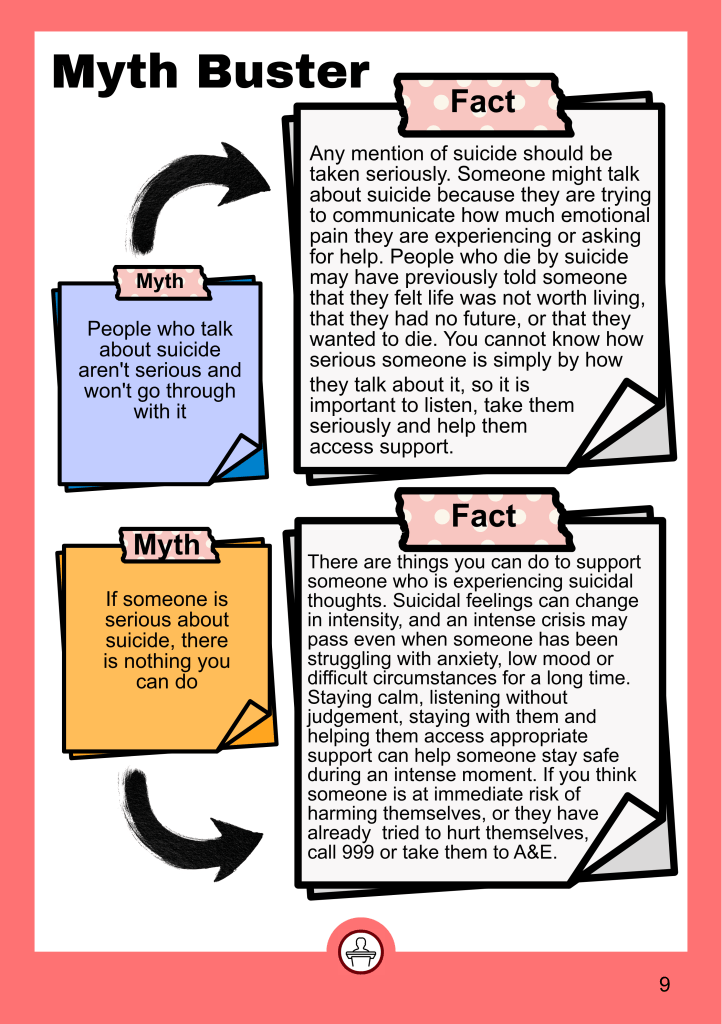
Myth: “People who talk about suicide aren’t serious and won’t go through with it.”
Truth: Any mention of suicide should be taken seriously. Someone might talk about suicide because they are trying to communicate how much emotional pain they are experiencing or asking for help. People who die by suicide may have previously told someone that they felt life was not worth living, that they had no future, or that they wanted to die. You cannot know how serious someone is simply by how they talk about it, so it is important to listen, take them seriously and help them access support.
Myth: “If someone is serious about suicide, there is nothing you can do.”
Truth: There are things you can do to support someone who is experiencing suicidal thoughts. Suicidal feelings can change in intensity, and an intense crisis may pass even when someone has been struggling with anxiety, low mood or difficult circumstances for a long time. Staying calm, listening without judgement, staying with them and helping them access appropriate support can help someone stay safe during an intense moment. If you think someone is at immediate risk of harming themselves, or they have already tried to hurt themselves, call 999 or take them to A&E.
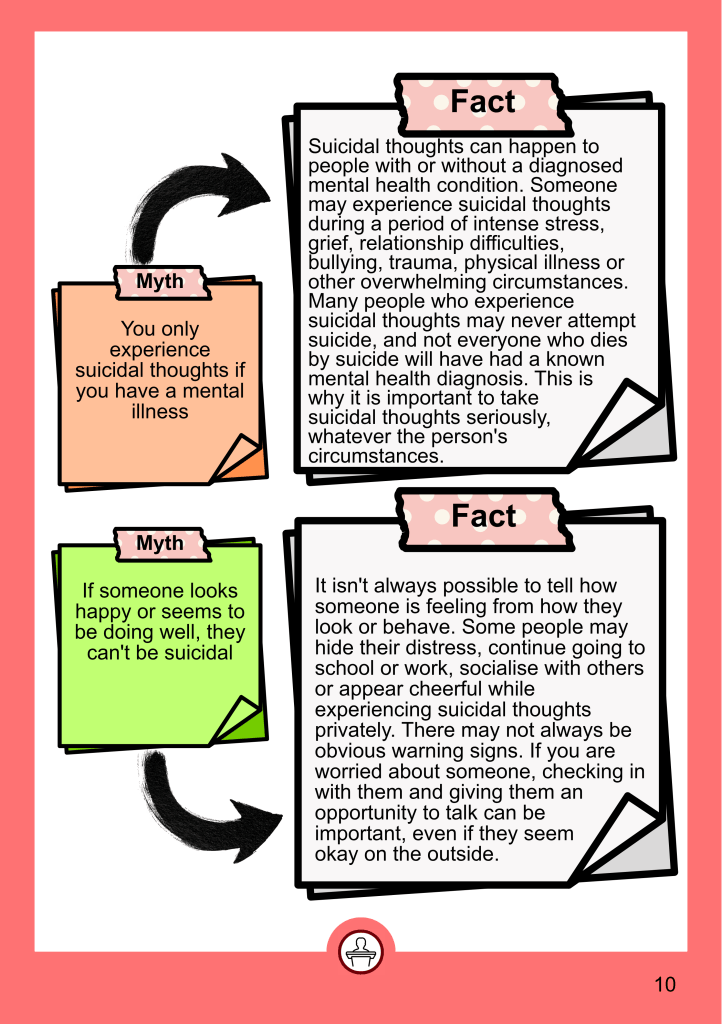
Myth: “You only experience suicidal thoughts if you have a mental illness.”
Truth: Suicidal thoughts can happen to people with or without a diagnosed mental health condition. Someone may experience suicidal thoughts during a period of intense stress, grief, relationship difficulties, bullying, trauma, physical illness or other overwhelming circumstances. Many people who experience suicidal thoughts may never attempt suicide, and not everyone who dies by suicide will have had a known mental health diagnosis. This is why it is important to take suicidal thoughts seriously, whatever the person’s circumstances.
Myth: “If someone looks happy or seems to be doing well, they can’t be suicidal.”
Truth: It isn’t always possible to tell how someone is feeling from how they look or behave. Some people may hide their distress, continue going to school or work, socialise with others or appear cheerful while experiencing suicidal thoughts privately. There may not always be obvious warning signs. If you are worried about someone, checking in with them and giving them an opportunity to talk can be important, even if they seem okay on the outside.
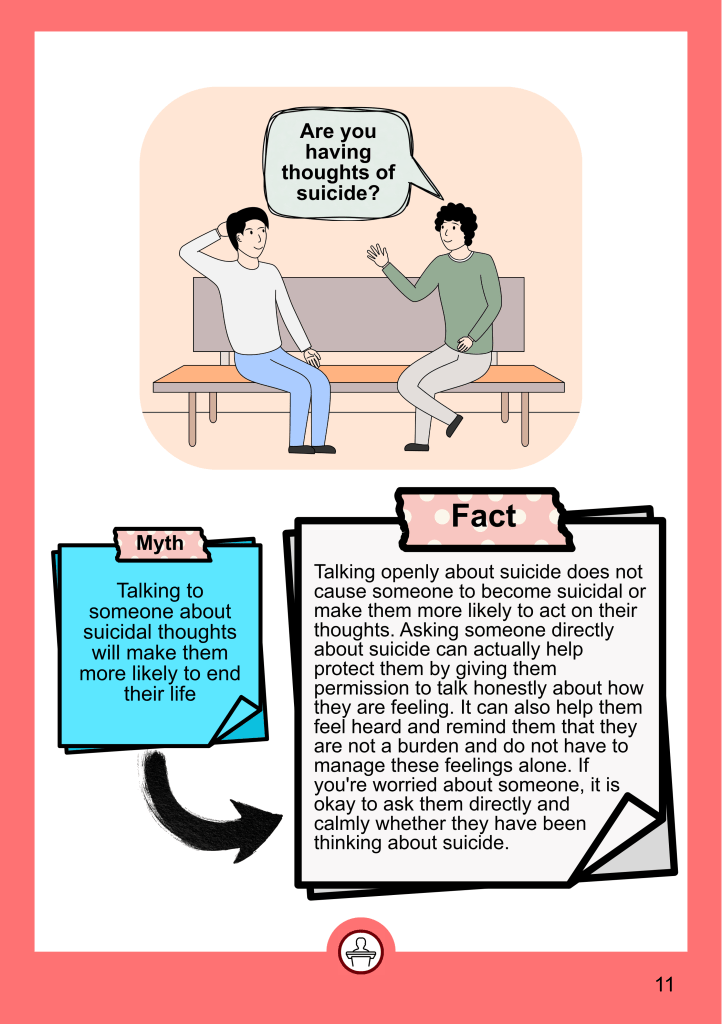
Myth: “Talking to someone about suicidal thoughts will make them more likely to end their life.”
Truth: Talking openly about suicide does not cause someone to become suicidal or make them more likely to act on their thoughts. Asking someone directly about suicide can actually help protect them by giving them permission to talk honestly about how they are feeling. It can also help them feel heard and remind them that they are not a burden and do not have to manage these feelings alone. If you’re worried about someone, it is okay to ask them directly and calmly whether they have been thinking about suicide.
Therapy
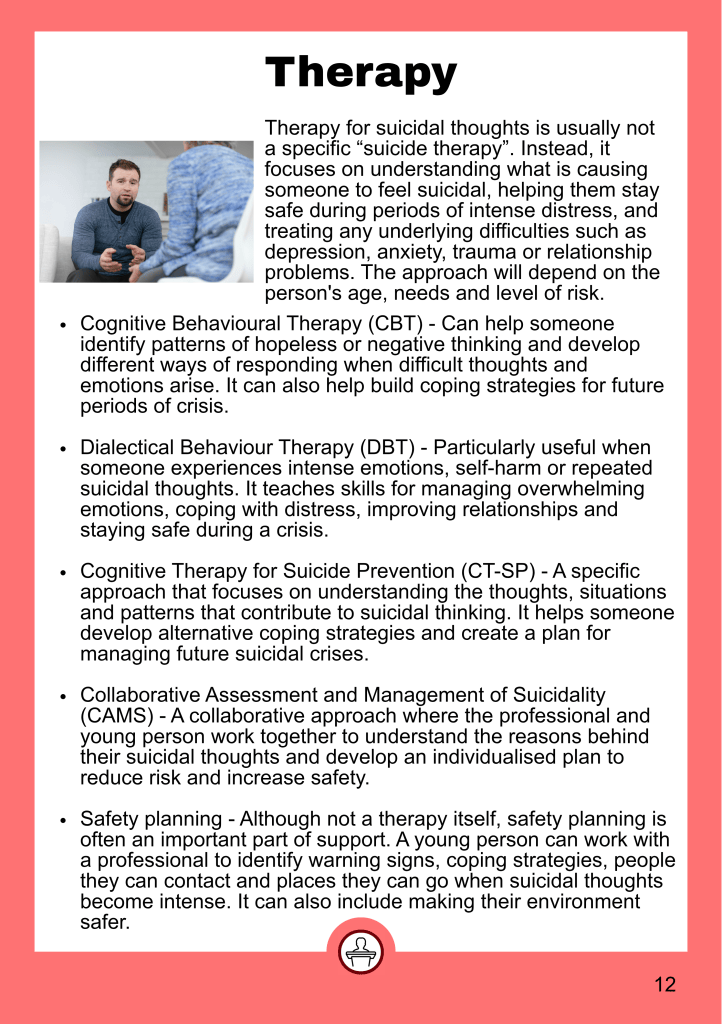
Therapy for suicidal thoughts is usually not a specific “suicide therapy”. Instead, it focuses on understanding what is causing someone to feel suicidal, helping them stay safe during periods of intense distress, and treating any underlying difficulties such as depression, anxiety, trauma or relationship problems. The approach will depend on the person’s age, needs and level of risk.
- Cognitive Behavioural Therapy (CBT) – Can help someone identify patterns of hopeless or negative thinking and develop different ways of responding when difficult thoughts and emotions arise. It can also help build coping strategies for future periods of crisis.
- Dialectical Behaviour Therapy (DBT) – Particularly useful when someone experiences intense emotions, self-harm or repeated suicidal thoughts. It teaches skills for managing overwhelming emotions, coping with distress, improving relationships and staying safe during a crisis.
- Cognitive Therapy for Suicide Prevention (CT-SP) – A specific approach that focuses on understanding the thoughts, situations and patterns that contribute to suicidal thinking. It helps someone develop alternative coping strategies and create a plan for managing future suicidal crises.
- Collaborative Assessment and Management of Suicidality (CAMS) – A collaborative approach where the professional and young person work together to understand the reasons behind their suicidal thoughts and develop an individualised plan to reduce risk and increase safety.
- Safety planning – Although not a therapy itself, safety planning is often an important part of support. A young person can work with a professional to identify warning signs, coping strategies, people they can contact and places they can go when suicidal thoughts become intense. It can also include making their environment safer.
- Family therapy / family-based support – For children and young people, involving parents or carers can help improve communication, strengthen support around the young person and develop a shared plan for keeping them safe.
- Therapy for underlying difficulties – Suicidal thoughts can occur alongside depression, anxiety, trauma, eating difficulties, substance use or other mental health problems. Treating these difficulties may help reduce suicidal thoughts and improve someone’s ability to cope.
Helplines
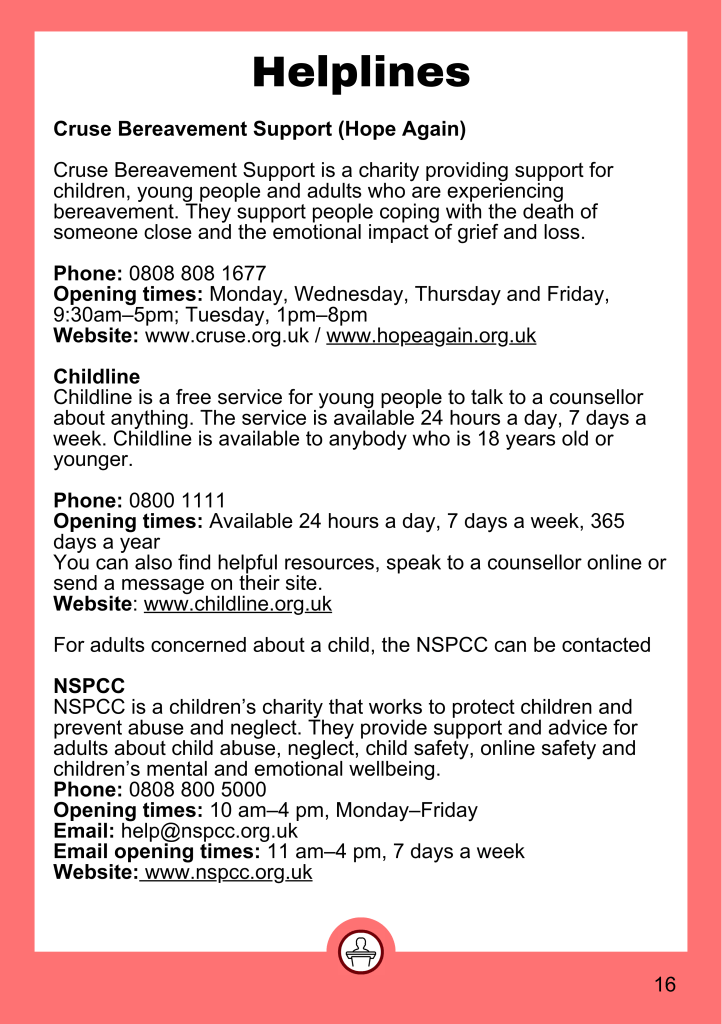
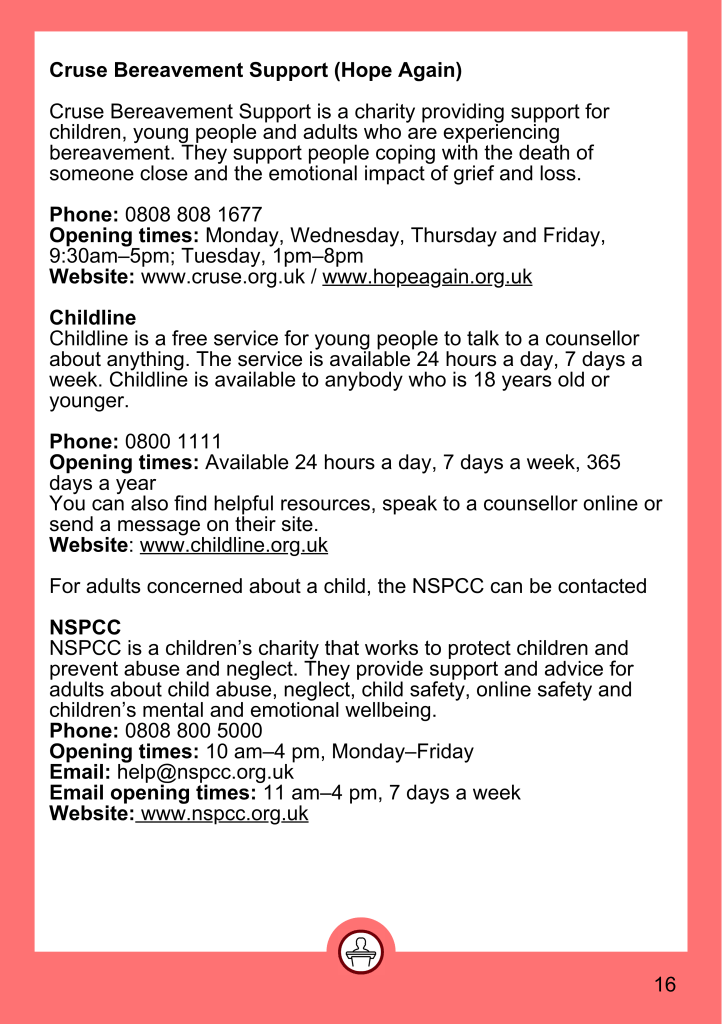
Childline
Childline is a free service for young people to talk to a counsellor about anything. The service is available 24 hours a day, 7 days a week. Childline is available to anybody who is 18 years old or younger.
Phone: 0800 1111
Opening times: Available 24 hours a day, 7 days a week, 365 days a year
You can also find helpful resources, speak to a counsellor online or send a message on their site.
Website: www.childline.org.uk
For adults concerned about a child, the NSPCC can be contacted
NSPCC
NSPCC is a children’s charity that works to protect children and prevent abuse and neglect. They provide support and advice for adults about child abuse, neglect, child safety, online safety and children’s mental and emotional wellbeing.
Phone: 0808 800 5000
Opening times: 10 am–4 pm, Monday–Friday
Email: help@nspcc.org.uk
Email opening times: 11 am–4 pm, 7 days a week
Website: www.nspcc.org.uk
Shout
Shout is a free, confidential text messaging service that provides support to anyone who is struggling to cope. It can help with a wide range of issues, including stress, anxiety, low mood, loneliness, relationship difficulties, bullying, self-harm, suicidal thoughts, feeling overwhelmed and other mental health challenges.
Text: SHOUT to 85258
Opening times: Available 24 hours a day, 7 days a week, 365 days a year
Website: www.giveusashout.org
Samaritans
Samaritans is a charity providing emotional support to anyone who is struggling to cope or needs someone to talk to. They are there for people experiencing all sorts of difficulties, including stress, anxiety, loneliness, relationship or family problems, bereavement, feeling overwhelmed and concerns about mental health or suicide.
Phone: 116 123
Opening times: 24 hours a day, 7 days a week, 365 days a year
Website: www.samaritans.org
YoungMinds
YoungMinds is a national charity supporting the mental health and wellbeing of children and young people. They provide information, advice and support for parents and carers who are concerned about a young person’s mental health, and help people understand mental health difficulties, find appropriate support and access useful resources. Their Parents Helpline can provide information, advice, emotional support and signposting to other services.
Parent helpline: 0808 802 5544 (9:30 am – 4 pm on Mondays, Thursdays and Fridays, and from 9:30 am – 6 pm on Tuesdays and Wednesdays)
Email: parents@youngminds.org.uk
Webchat: https://www.youngminds.org.uk/parent/parents-helpline/
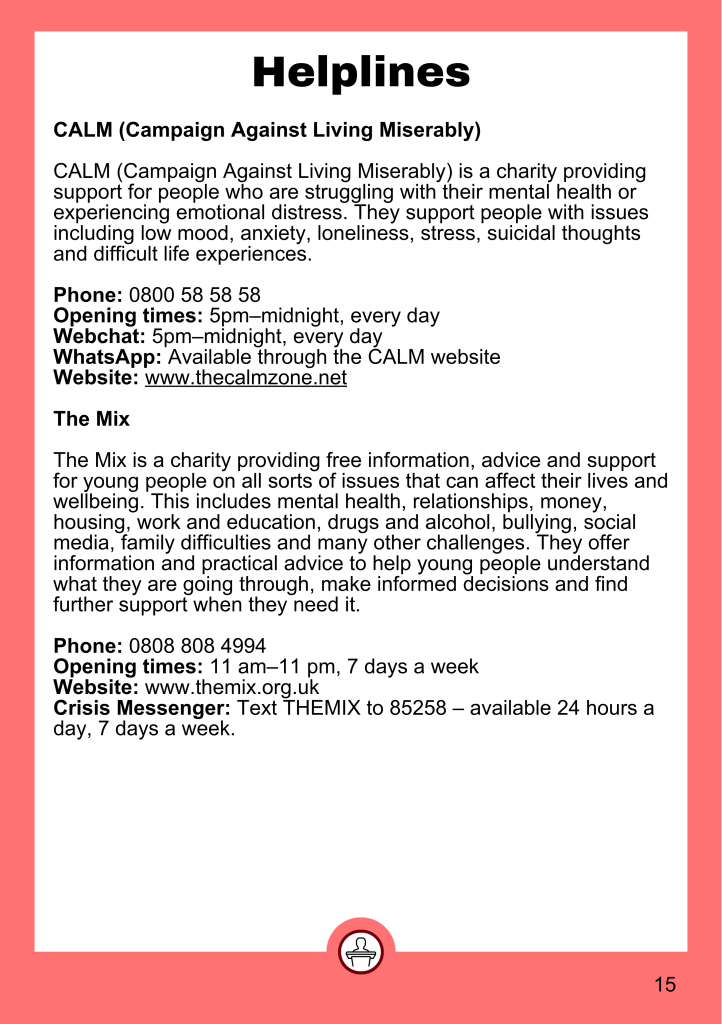
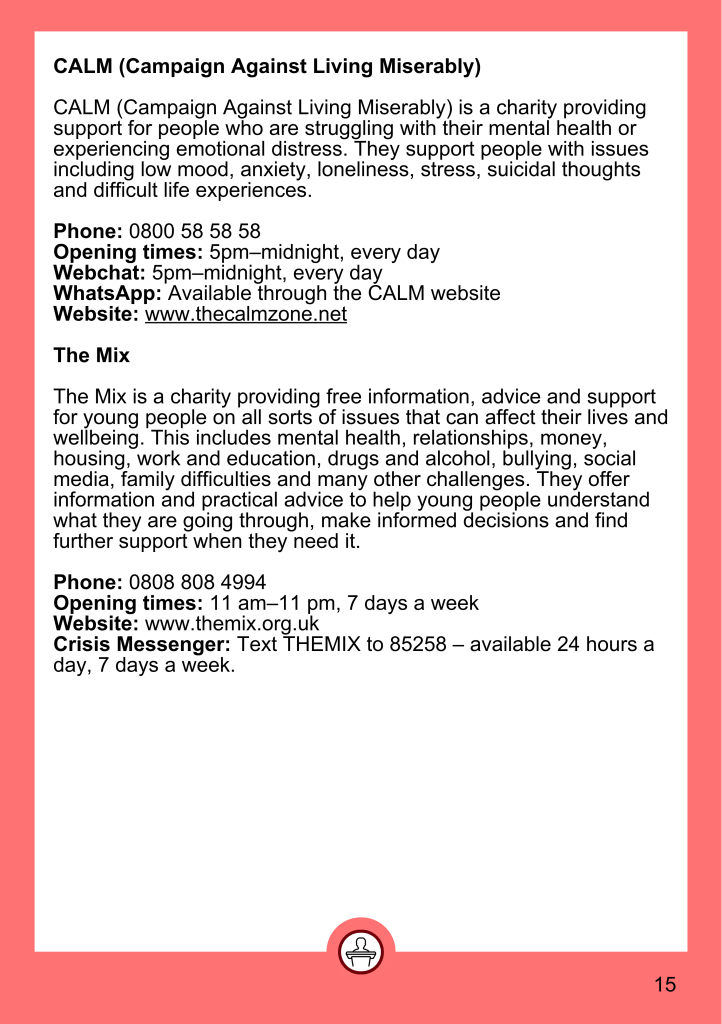
CALM (Campaign Against Living Miserably)
CALM (Campaign Against Living Miserably) is a charity providing support for people who are struggling with their mental health or experiencing emotional distress. They support people with issues including low mood, anxiety, loneliness, stress, suicidal thoughts and difficult life experiences.
Phone: 0800 58 58 58
Opening times: 5pm–midnight, every day
Webchat: 5pm–midnight, every day
WhatsApp: Available through the CALM website
Website: www.thecalmzone.net
The Mix
The Mix is a charity providing free information, advice and support for young people on all sorts of issues that can affect their lives and wellbeing. This includes mental health, relationships, money, housing, work and education, drugs and alcohol, bullying, social media, family difficulties and many other challenges. They offer information and practical advice to help young people understand what they are going through, make informed decisions and find further support when they need it.
Phone: 0808 808 4994
Opening times: 11 am–11 pm, 7 days a week
Website: http://www.themix.org.uk
Crisis Messenger: Text THEMIX to 85258 – available 24 hours a day, 7 days a week.
Cruse Bereavement Support (Hope Again)
Cruse Bereavement Support is a charity providing support for children, young people and adults who are experiencing bereavement. They support people coping with the death of someone close and the emotional impact of grief and loss.
Phone: 0808 808 1677
Opening times: Monday, Wednesday, Thursday and Friday, 9:30am–5pm; Tuesday, 1pm–8pm
Website: http://www.cruse.org.uk / http://www.hopeagain.org.uk