Summary
When someone we know or love dies, it can be difficult to understand what we are feeling and how we are expected to respond. Grief is a natural response to loss, but there is no single or “right” way to grieve. Some people may feel overwhelmed by sadness, while others may feel numb, confused or even relieved, particularly if the person had been unwell for a long time. You may experience lots of different emotions, or feel very little at first.
Grief can affect your emotions, thoughts, body and behaviour. You might feel sad, angry, guilty, anxious, helpless, numb or low. You may also feel shocked or confused, particularly if the death was sudden or unexpected. Some people experience a sense of unreality or find it difficult to believe that the person has died. You might miss them intensely at one moment and then feel relatively normal at another. These changes do not mean that you are grieving incorrectly.
You may notice physical effects too. Grief can leave you feeling exhausted and may affect your sleep, appetite, energy levels and concentration. You might experience headaches, muscle tension, changes in your stomach or a general feeling of being physically unwell. You may find it harder to remember things, make decisions or focus on school, work or conversations.
Your behaviour and routines may change as well. You might cry, become more irritable or frustrated, spend more time alone or want to be around other people for comfort. You may lose interest in activities you usually enjoy, eat more or less than usual, or find it difficult to keep up with everyday responsibilities. Some people continue with their usual routines and do not notice many obvious changes in how they behave.
It is also common to think about the person who has died a lot. You might remember particular conversations or experiences, look at photographs, listen to music that reminds you of them or find yourself expecting to see or hear them. You might also think about things you wish you had said or done differently. Feelings of guilt or regret can be part of grief, even when there was nothing you could realistically have done differently.
Grief can affect relationships too. People who are grieving the same person may respond very differently. One person might want to talk about the person who died, while another might find talking difficult. You may want support from friends and family one day and need more space the next. Differences in how people grieve do not necessarily mean that someone cared more or less.
Grief can also come in waves. You may have periods where you feel more like yourself and then suddenly feel upset because of a memory, conversation, place, smell, song or important date. These reminders can happen months or even years after a death. Feeling happy, laughing or enjoying yourself does not mean that you have stopped caring about the person or that you have moved on “too quickly”.
Grief does not follow a predictable timeline. There is no set amount of time that you should need to feel better, and grief may change rather than completely disappear. Over time, many people find ways to carry their loss while continuing with their lives, although certain days or experiences may still bring strong feelings.
How to help myself
Look after your basic needs as much as you can. Grief can affect your sleep, appetite, energy and concentration, so try to keep some structure in your day even when you do not feel like doing much. Keeping a regular sleep routine, drinking enough water and having something to eat regularly can help you look after your body. If your appetite is low, smaller meals and easy-to-eat foods may feel more manageable.
Give yourself opportunities to rest and do things that help you feel calm or comfortable. This could include listening to music, spending time outside, cooking or baking, having a warm shower or bath, watching something familiar or doing a hobby you enjoy. You do not have to be productive all the time, and it is okay to have days where you need to do less.
Finding ways to express your grief can be helpful. You might want to talk about your loved one, write about how you are feeling, keep a journal, make something creative, listen to music that reminds you of them or write them a letter. You do not have to share what you create with anyone. Some people find it helpful simply to have somewhere to put thoughts and feelings that are difficult to say out loud.
Try not to put pressure on yourself to grieve in a particular way. You might cry a lot, barely cry at all, want to talk about the person constantly or find that you would rather not talk about them yet. You might feel very sad one day and laugh or enjoy yourself the next. Having moments of happiness does not mean that you have forgotten the person or that you are grieving incorrectly.
Grief can feel very lonely, even when you are surrounded by other people. If you are not ready to talk, you can still spend time with someone you trust. You could sit together, watch something, go for a walk, play a game or simply be in the same room. If reaching out feels difficult, start with one person and let them know what kind of company or support would feel helpful.
Finding ways to stay connected to the person who died can also be meaningful. You might keep photographs, belongings or something they gave you, visit a place that reminds you of them, continue a family tradition, cook their favourite meal or listen to music they enjoyed. There is no right way to remember someone, so find something that feels meaningful to you.
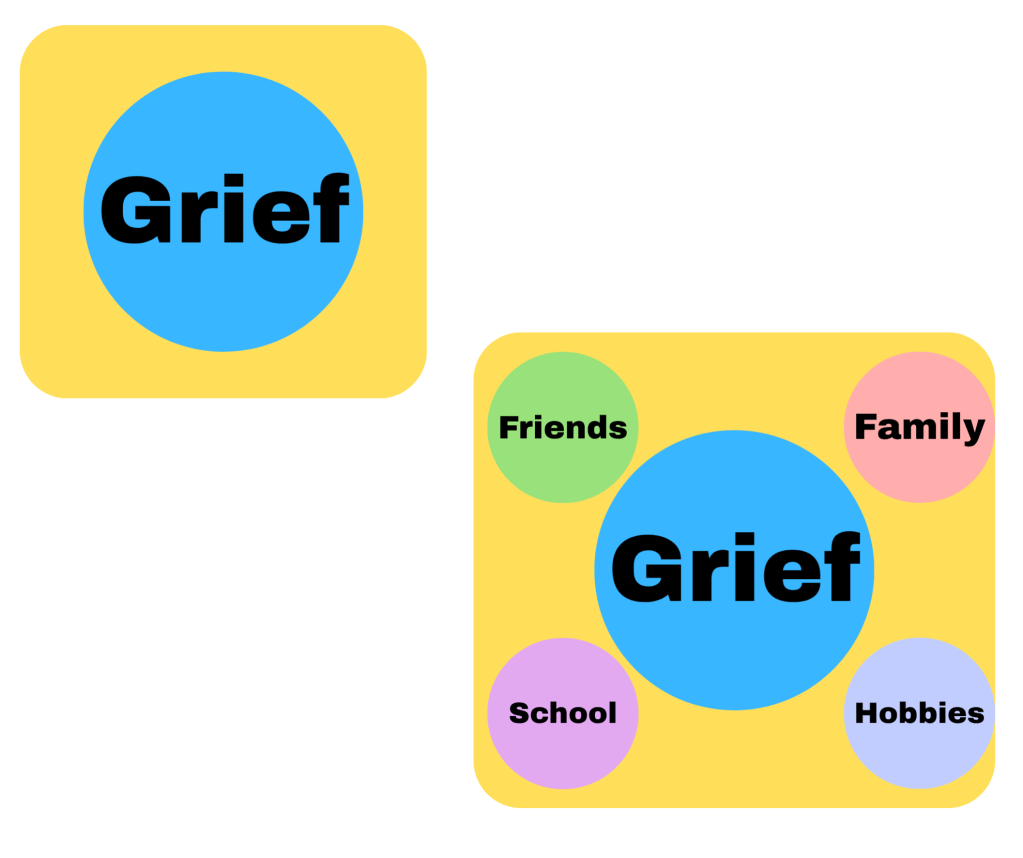
It can sometimes help to imagine grief as a ball inside a box. When someone or something you love dies, the box can feel very small, and the grief ball can seem to hit the sides constantly. Everyday experiences such as seeing your loved one’s belongings, going to school, eating dinner, hearing a particular song or visiting a familiar place can suddenly trigger a strong wave of grief. It can feel as though there is no space to get away from it.
Over time, the grief does not necessarily disappear, but the box can become bigger. New routines, experiences, relationships and things that you enjoy can create more space around the grief. The ball can still hit the sides unexpectedly, particularly around birthdays, anniversaries or reminders of the person, but there may be longer periods between these moments. The grief can remain because the person continues to matter to you, while your life gradually grows around the loss.
How to help a loved one
Let your loved one know that you are there for them and willing to listen when they feel ready to talk. You do not need to have the right words or find a way to make their grief disappear. Sometimes simply sitting with them, listening without judgement or doing something familiar together can provide comfort.
Remind them that it is okay to experience different emotions, including moments of happiness. They might laugh, smile, enjoy time with friends or become interested in something they usually enjoy while still grieving. These moments do not mean that they have forgotten the person who died or that they are grieving incorrectly. Avoid putting pressure on them to appear sad or to behave in a particular way.
Be honest and use clear, age-appropriate language when talking about death, particularly with younger children. Phrases such as “they’ve gone to sleep” or “we’ve lost them” can be confusing and may create fears about sleeping or other people going missing. Using clear language such as “they died” can help children understand what has happened. Be prepared to answer questions, even if the answer is “I don’t know”. It is okay to be honest when you do not have an answer.
Try to notice what your loved one needs rather than assuming that everyone grieves in the same way. They might want to talk about the person who died, spend time alone, be around other people or carry on with their usual routines. Their needs may also change from one day to the next. Offer practical support with things such as meals, school, appointments or everyday tasks when these feel difficult.
Grief takes time and does not follow a predictable timeline. Your loved one may seem more like themselves for a while and then become upset again because of a reminder, important date or unexpected memory. Try not to put pressure on them to “move on” or expect them to feel better within a particular timeframe.
Remember to look after yourself too. If someone you love is grieving, you may also be experiencing your own grief, and different people in the same family can have very different needs. You might need to talk, while your loved one wants space, or you may want to spend time together when they would rather be alone. Try to communicate openly about what you each need and seek your own support when necessary.
Myth Buster
Myth: “There is a right way to grieve.”
Truth: Grief is different for everyone. Some people cry, while others may feel numb, angry, anxious or even relieved. You might want to talk about the person who died or prefer not to. There is no particular emotion you have to feel or way you have to behave for your grief to be valid.
Myth: “Grief happens in five stages.”
Truth: You may have heard about the five stages of grief, but grief does not usually happen in a fixed order. Emotions can overlap, return or change from day to day. You might experience some of the feelings associated with the stages, all of them or none of them.
Myth: “You should be over it by now.”
Truth: There is no set timeline for grief. Strong feelings may become less frequent or easier to manage over time, but reminders such as birthdays, anniversaries, songs or places can bring grief back unexpectedly, even years later.
Myth: “If you are not crying, you are not grieving.”
Truth: Crying is only one possible response to grief. Someone might feel numb, become quieter, feel irritable, have difficulty concentrating, keep themselves busy or show very little outward change. You cannot always tell how much someone is grieving by looking at them.
Myth: “Feeling relieved means you did not care about the person.”
Truth: Relief can be a normal part of grief, particularly if someone had been unwell or suffering for a long time, or if caring for them had been difficult. Relief can exist alongside sadness, love and missing the person.
Myth: “Having fun means you are moving on or forgetting them.”
Truth: Laughing, spending time with friends and enjoying things does not mean that you have stopped grieving or forgotten the person who died. It is possible to miss someone while continuing to experience happiness and build new experiences.
Myth: “Talking about the person who died will make things worse.”
Truth: Some people find talking about the person comforting and enjoy sharing memories, while others may not feel ready to talk. You do not need to avoid mentioning someone who has died, but it is helpful to follow the grieving person’s lead and respect what feels comfortable for them.
Myth: “You need to be strong for everyone else.”
Truth: You do not have to hide your own grief to support other people. It is okay to be upset, ask for help and let other people support you. Family members can grieve together while still experiencing the loss in different ways.
Support
Experiencing the death of someone you know or love is a difficult part of life, and there is no single way to respond to loss. You might cry, become quieter, want to be around other people, use humour, feel angry or find that you do not show much emotion at all. These responses can all occur during grief.
Sometimes additional support can be helpful, particularly if you are finding it difficult to manage everyday life or feel that things are becoming harder rather than more manageable. You might benefit from extra support if you are experiencing frequent panic attacks, feeling very anxious or low, losing interest in things you usually enjoy, struggling to concentrate, spending long periods isolated from other people, or using alcohol or drugs to cope with how you are feeling.
You may also want to seek support if you are struggling to sleep or eat, finding it difficult to attend school or work, unable to manage everyday responsibilities, or feeling that your grief is becoming too difficult to cope with on your own. You do not have to wait until things become severe before asking for help.
Talking to friends or family can be helpful, but you can also speak to your GP or another mental health professional if you would prefer. They can talk with you about how you have been coping, help you understand what support might be appropriate and refer you to further services if needed.
If you are having thoughts about hurting yourself, ending your life or feeling that you cannot keep yourself safe, seek urgent support rather than dealing with this alone. You can contact NHS 111 for urgent mental health support, or call 999 or go to A&E if you are in immediate danger.
Therapy interventions
Grief is a natural response to losing someone and does not always require therapy. However, talking therapies can be helpful if grief is causing significant distress, affecting everyday life or becoming difficult to manage. The type of support offered will depend on your individual experiences and needs.
- Grief counselling – can provide a safe space to talk about the person who died, explore your emotions and adjust to changes following the loss. It can also help you find ways to maintain a meaningful connection with the person while continuing with everyday life.
- Cognitive Behavioural Therapy (CBT) – can help you understand the relationship between your thoughts, feelings and behaviours following a loss. It may be useful when grief is accompanied by anxiety, low mood, guilt or difficulties returning to everyday activities.
- Complicated Grief Therapy – is a specialist approach for people experiencing persistent and intense grief that continues to significantly affect their lives. It can help you process the loss, work through difficult emotions and gradually reconnect with everyday activities and relationships.
- Trauma-focused therapy – may be appropriate when the death was sudden, unexpected or traumatic and you are experiencing symptoms such as flashbacks, nightmares, avoidance or feeling constantly on edge. Approaches can include Trauma-Focused CBT or Eye Movement Desensitisation and Reprocessing (EMDR).
- Family Therapy – may be helpful when a death has affected the whole family. It can provide a space to understand how different family members are coping, improve communication and work out how to support each other while respecting that everyone may grieve differently.
Helplines
Shout
Shout is a free, confidential text messaging service that provides support to anyone who is struggling to cope. It can help with a wide range of issues, including stress, anxiety, low mood, loneliness, relationship difficulties, bullying, self-harm, suicidal thoughts, feeling overwhelmed and other mental health challenges.
Text: SHOUT to 85258
Opening times: Available 24 hours a day, 7 days a week, 365 days a year
Website: www.giveusashout.org
Childline
Childline is a free service for young people to talk to a counsellor about anything. The service is available 24 hours a day, 7 days a week. Childline is available to anybody who is 18 years old or younger.
Phone: 0800 1111
Opening times: Available 24 hours a day, 7 days a week, 365 days a year
You can also find helpful resources, speak to a counsellor online or send a message on their site.
Website: www.childline.org.uk
For adults concerned about a child, the NSPCC can be contacted
NSPCC
NSPCC is a children’s charity that works to protect children and prevent abuse and neglect. They provide support and advice for adults about child abuse, neglect, child safety, online safety and children’s mental and emotional wellbeing.
Phone: 0808 800 5000
Opening times: 10 am–4 pm, Monday–Friday
Email: help@nspcc.org.uk
Email opening times: 11 am–4 pm, 7 days a week
Website: www.nspcc.org.uk
Samaritans
Samaritans is a charity providing emotional support to anyone who is struggling to cope or needs someone to talk to. They are there for people experiencing all sorts of difficulties, including stress, anxiety, loneliness, relationship or family problems, bereavement, feeling overwhelmed and concerns about mental health or suicide.
Phone: 116 123
Opening times: 24 hours a day, 7 days a week, 365 days a year
Website: http://www.samaritans.org
Cruse Bereavement Support (Hope Again)
Cruse Bereavement Support is a charity providing support for children, young people and adults who are experiencing bereavement. They support people coping with the death of someone close and the emotional impact of grief and loss.
Phone: 0808 808 1677
Opening times: Monday, Wednesday, Thursday and Friday, 9:30am–5pm; Tuesday, 1pm–8pm
Website: http://www.cruse.org.uk / www.hopeagain.org.uk
Hope Again
Hope Again is a service from Cruse Bereavement Support providing information and support for young people who are coping with the death of someone close to them. It covers bereavement, grief and the emotional impact of losing someone.
Phone: 0808 808 1677
Opening times: Monday, Wednesday, Thursday & Friday 9:30 am–5 pm; Tuesday 1 pm–8 pm.
Website: www.cruse.org.uk
Sue Ryder
Sue Ryder is a charity providing support for people affected by bereavement, grief, dying and loss. They provide support for children, young people and adults experiencing the death of someone close to them.
Website: http://www.sueryder.org
Opening times: Online bereavement community available 24/7
Survivors of Bereavement by Suicide (SoBS)
Survivors of Bereavement by Suicide (SoBS) is a charity providing peer support for individuals who have been bereaved by suicide. It provides support groups, a telephone helpline, email support and an online community for people affected by suicide loss.
Phone: 0300 111 5065
Opening times: 9 am–7 pm, every day
Email: email.support@uksobs.org
Website: www.uksobs.org
Let’s Talk About Loss
Let’s Talk About Loss is a charity that provides support to young people experiencing bereavement and grief. They support young people dealing with the death of someone close to them and the emotional impact of loss.
Phone: 07786 592759
Email: hello@letstalkaboutloss.org
Website: http://www.letstalkaboutloss.org
Opening times: 9 am–5 pm, Monday–Friday
The Support After Suicide Partnership (SASP)
The Support After Suicide Partnership (SASP) is a UK network of organisations that supports people who have been bereaved or affected by suicide. It brings together services and resources providing suicide bereavement support, information and guidance.
Website: www.supportaftersuicide.org.uk

