Summary
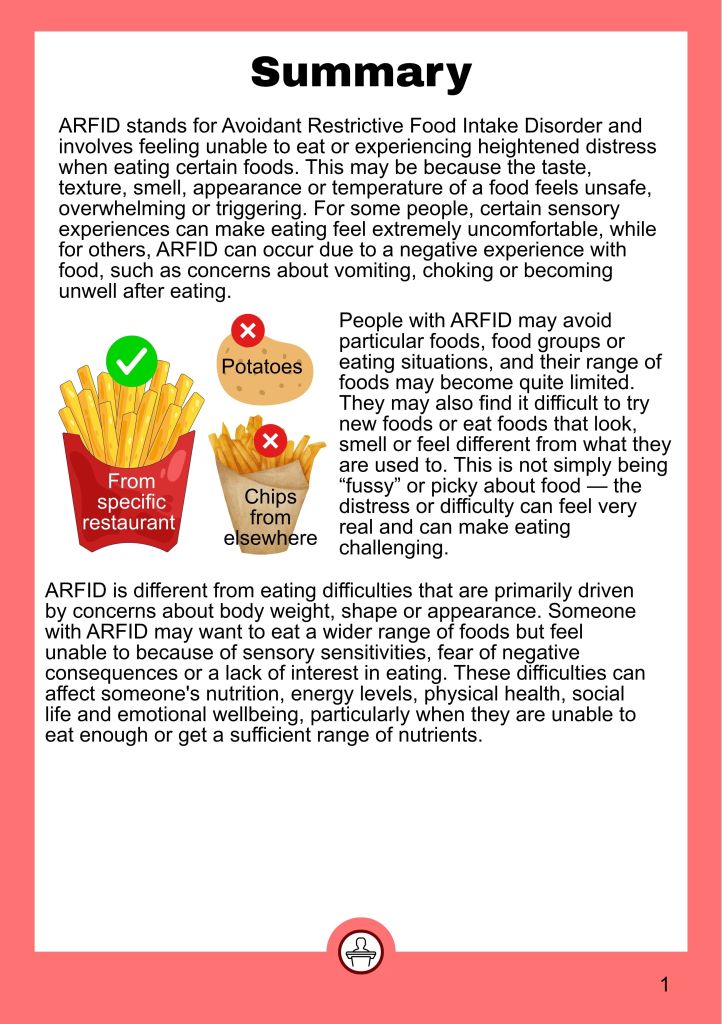
ARFID stands for Avoidant Restrictive Food Intake Disorder and involves feeling unable to eat or experiencing heightened distress when eating certain foods. This may be because the taste, texture, smell, appearance or temperature of a food feels unsafe, overwhelming or triggering. For some people, certain sensory experiences can make eating feel extremely uncomfortable, while for others, ARFID can occur due to a negative experience with food, such as concerns about vomiting, choking or becoming unwell after eating.
People with ARFID may avoid particular foods, food groups or eating situations, and their range of foods may become quite limited. They may also find it difficult to try new foods or eat foods that look, smell or feel different from what they are used to. This is not simply being “fussy” or picky about food — the distress or difficulty can feel very real and can make eating challenging.
ARFID is different from eating difficulties that are primarily driven by concerns about body weight, shape or appearance. Someone with ARFID may want to eat a wider range of foods but feel unable to because of sensory sensitivities, fear of negative consequences or a lack of interest in eating. These difficulties can affect someone’s nutrition, energy levels, physical health, social life and emotional wellbeing, particularly when they are unable to eat enough or get a sufficient range of nutrients.
ARFID can look different for everyone. Someone may experience some of these difficulties, while others may experience them more strongly or in different ways.
- Sensitivity to certain foods because of their texture, smell, taste, appearance or temperature. Some foods may feel overwhelming, unpleasant or unsafe.
- Having a small number of “safe foods” that feel familiar, predictable or enjoyable to eat. They may prefer foods to be prepared or presented in a particular way.
- Avoiding social situations where food is present, such as restaurants, parties, school meals or eating with friends, because these situations can feel uncomfortable or stressful.
- Finding that eating feels like a chore and needing a lot of effort, thought or energy to eat, even when they know they are hungry.
- Feeling anxious or worried around mealtimes, particularly about trying unfamiliar foods, choking, vomiting, becoming unwell or experiencing an unpleasant sensory experience.
- Eating very slowly or carefully, such as taking small bites or sips, chewing food for a long time or taking a long time to finish a meal.
- Finding changes to familiar foods difficult, such as a different brand, shape, colour, texture, temperature or way of preparing the food.
- Avoiding particular foods or whole food groups because of their sensory qualities, previous experiences or fears about what might happen after eating them.
- Feeling distressed when encouraged or pressured to eat, especially when being asked to eat something that feels unsafe or overwhelming.
- Experiencing physical effects from restricted eating, such as low energy, feeling cold, dizziness or difficulty concentrating, particularly if they are not getting enough food or nutrients.
Safe foods
For those with ARFID, safe foods tend to be foods that feel familiar, predictable and comfortable to eat. They may have a mild flavour, a consistent texture, a familiar appearance or be prepared in a particular way. Safe foods are different for everyone, and a food that feels safe for one person may feel difficult or overwhelming for someone else. Some examples may include:
- White bread
- Plain pasta
- Crackers
- Toast
- Chicken nuggets
- Chips
- Plain rice
- Cereal
- Certain fruits or vegetables
- Yoghurt
- Plain biscuits
Someone may also have preferences about specific brands, shapes, temperatures or ways of preparing food. For example, they might only feel comfortable eating one particular brand of chicken nuggets or pasta, or prefer food to be served at a certain temperature.
Having safe foods can provide a sense of predictability and security around eating, particularly when mealtimes feel stressful. Safe foods can be an important part of supporting someone with ARFID, and they should not be removed or restricted as a way of encouraging someone to eat other foods.
ARFID versus picky eating
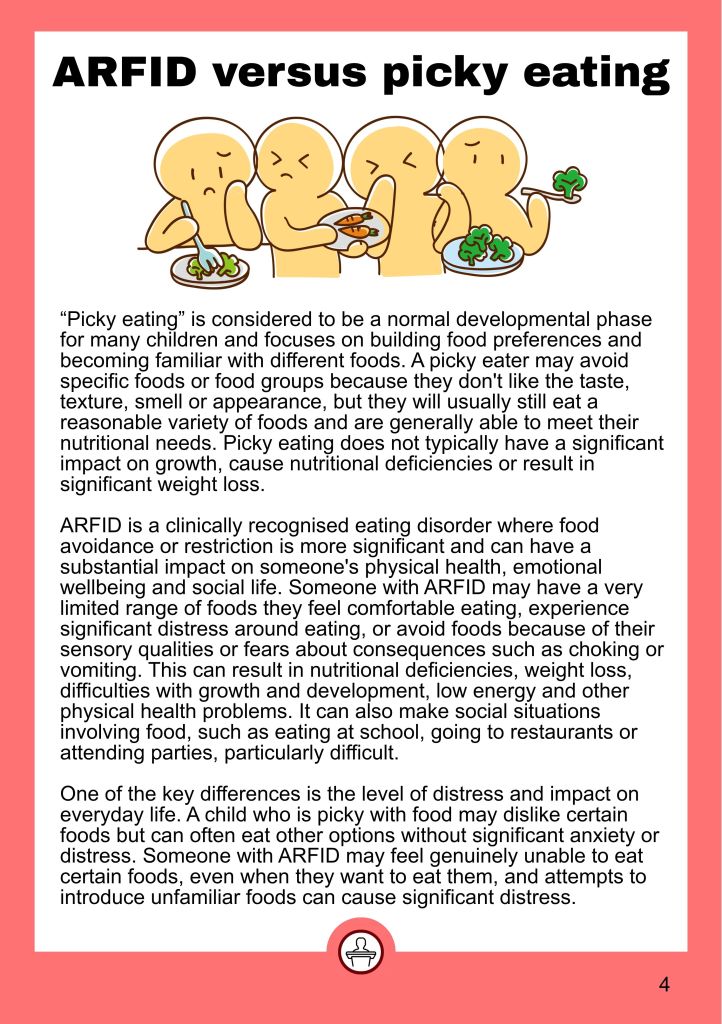
“Picky eating” is considered to be a normal developmental phase for many children and focuses on building food preferences and becoming familiar with different foods. A picky eater may avoid specific foods or food groups because they don’t like the taste, texture, smell or appearance, but they will usually still eat a reasonable variety of foods and are generally able to meet their nutritional needs. Picky eating does not typically have a significant impact on growth, cause nutritional deficiencies or result in significant weight loss.
ARFID is a clinically recognised eating disorder where food avoidance or restriction is more significant and can have a substantial impact on someone’s physical health, emotional wellbeing and social life. Someone with ARFID may have a very limited range of foods they feel comfortable eating, experience significant distress around eating, or avoid foods because of their sensory qualities or fears about consequences such as choking or vomiting. This can result in nutritional deficiencies, weight loss, difficulties with growth and development, low energy and other physical health problems. It can also make social situations involving food, such as eating at school, going to restaurants or attending parties, particularly difficult.
One of the key differences is the level of distress and impact on everyday life. A child who is picky with food may dislike certain foods but can often eat other options without significant anxiety or distress. Someone with ARFID may feel genuinely unable to eat certain foods, even when they want to eat them, and attempts to introduce unfamiliar foods can cause significant distress.
Picky eating also tends to change as children grow and become more familiar with different foods. ARFID can persist into adolescence and adulthood without appropriate support and may become more difficult to manage if someone’s range of safe foods becomes increasingly restricted. However, ARFID can occur at any age, and someone does not need to have had difficulties as a young child for their experiences to be valid.
It is also important to remember that ARFID is not about weight or wanting to change the way someone looks. The restriction is usually related to sensory sensitivities, a lack of interest in eating or concerns about negative consequences of eating, rather than wanting to lose weight or change their body shape.
Myth Buster
Myth: “If someone is hungry enough, they’ll eat.”
Truth: With picky eating, a child may be more willing to try a food they don’t particularly like when they are hungry. For someone with ARFID, hunger does not necessarily make eating a food feel possible or safe. They may continue to refuse a food even when they are very hungry because of sensory sensitivities, fear of choking or vomiting, or other difficulties around eating.
Myth: “You can just encourage or reward someone to eat a food they don’t like.”
Truth: Rewards, bribes or encouragement may sometimes help a picky eater try something new, but this is unlikely to work when someone has ARFID. The difficulty isn’t simply that they don’t want the food — they may experience significant distress or feel genuinely unable to eat it. Pressure to eat can sometimes make mealtimes more stressful.
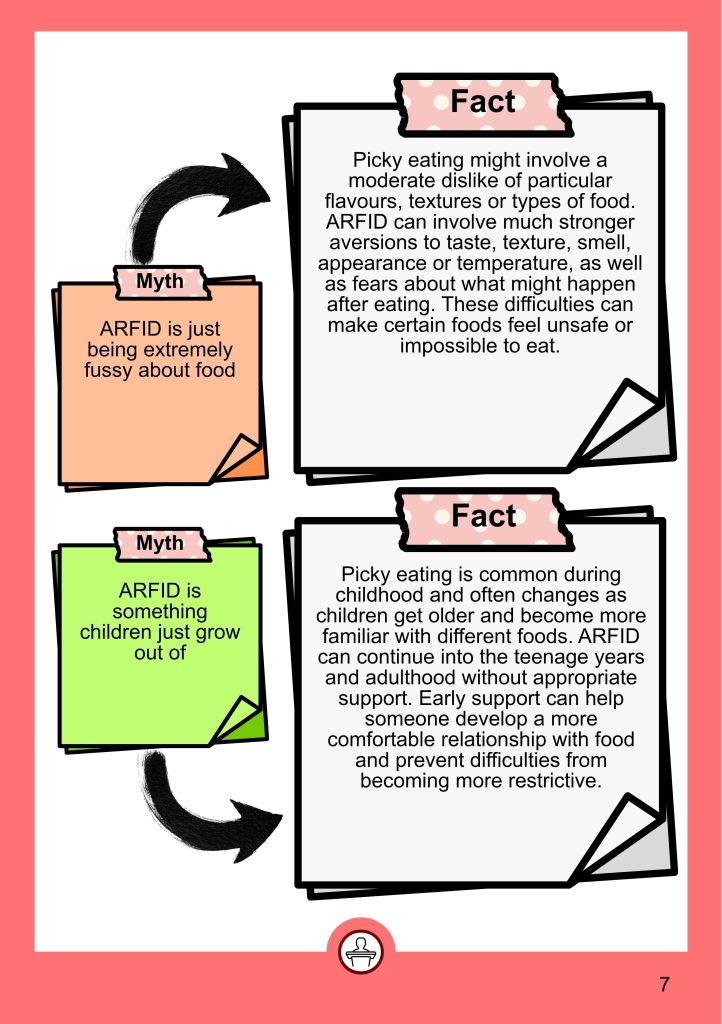
Myth: “ARFID is just being extremely fussy about food.”
Truth: Picky eating might involve a moderate dislike of particular flavours, textures or types of food. ARFID can involve much stronger aversions to taste, texture, smell, appearance or temperature, as well as fears about what might happen after eating. These difficulties can make certain foods feel unsafe or impossible to eat.
Myth: “ARFID is something children just grow out of.”
Truth: Picky eating is common during childhood and often changes as children get older and become more familiar with different foods. ARFID can continue into the teenage years and adulthood without appropriate support. Early support can help someone develop a more comfortable relationship with food and prevent difficulties from becoming more restrictive.
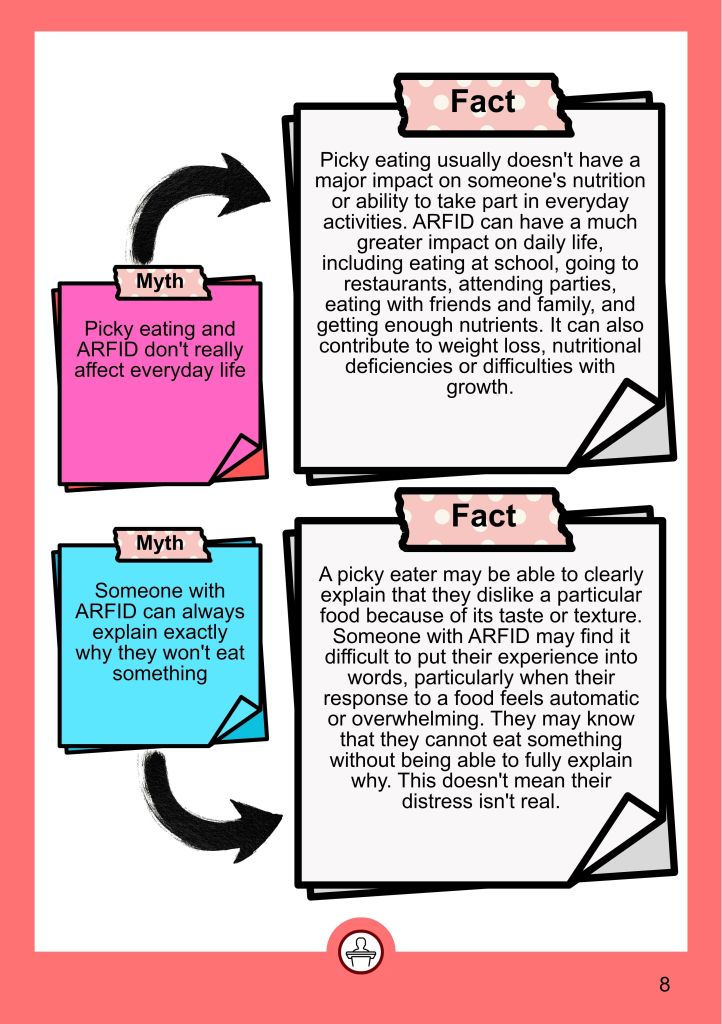
Myth: “Picky eating and ARFID don’t really affect everyday life.”
Truth: Picky eating usually doesn’t have a major impact on someone’s nutrition or ability to take part in everyday activities. ARFID can have a much greater impact on daily life, including eating at school, going to restaurants, attending parties, eating with friends and family, and getting enough nutrients. It can also contribute to weight loss, nutritional deficiencies or difficulties with growth.
Myth: “Someone with ARFID can always explain exactly why they won’t eat something.”
Truth: A picky eater may be able to clearly explain that they dislike a particular food because of its taste or texture. Someone with ARFID may find it difficult to put their experience into words, particularly when their response to a food feels automatic or overwhelming. They may know that they cannot eat something without being able to fully explain why. This doesn’t mean their distress isn’t real.
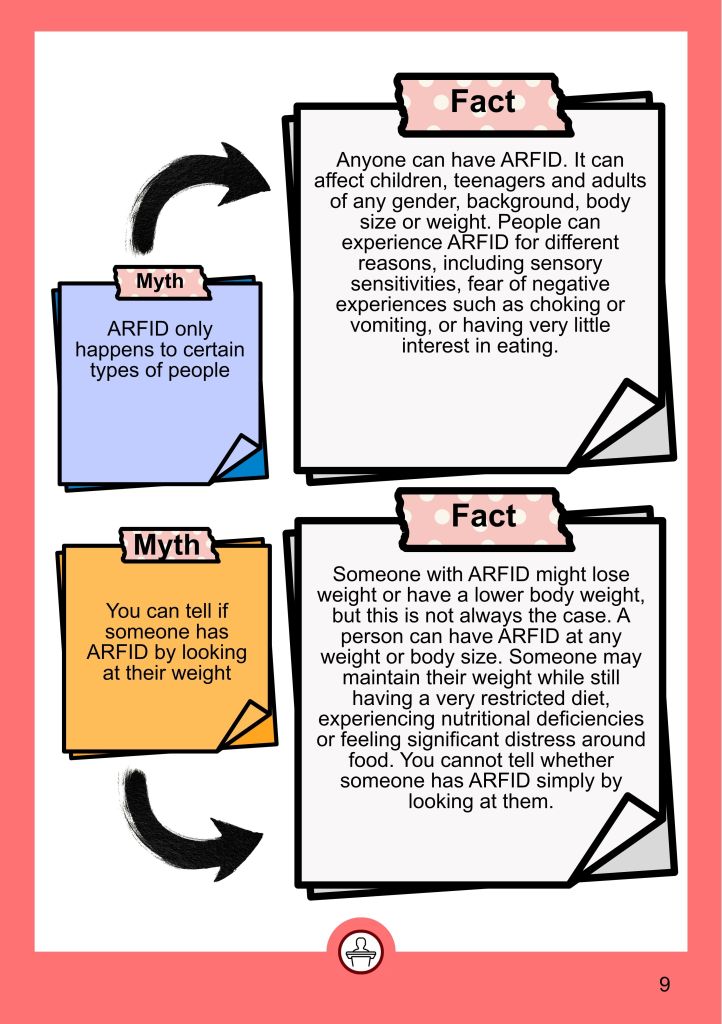
Myth: “ARFID only happens to certain types of people.”
Truth: Anyone can have ARFID. It can affect children, teenagers and adults of any gender, background, body size or weight. People can experience ARFID for different reasons, including sensory sensitivities, fear of negative experiences such as choking or vomiting, or having very little interest in eating.
Myth: “You can tell if someone has ARFID by looking at their weight.”
Truth: Someone with ARFID might lose weight or have a lower body weight, but this is not always the case. A person can have ARFID at any weight or body size. Someone may maintain their weight while still having a very restricted diet, experiencing nutritional deficiencies or feeling significant distress around food. You cannot tell whether someone has ARFID simply by looking at them.
How to help myself (under 25)
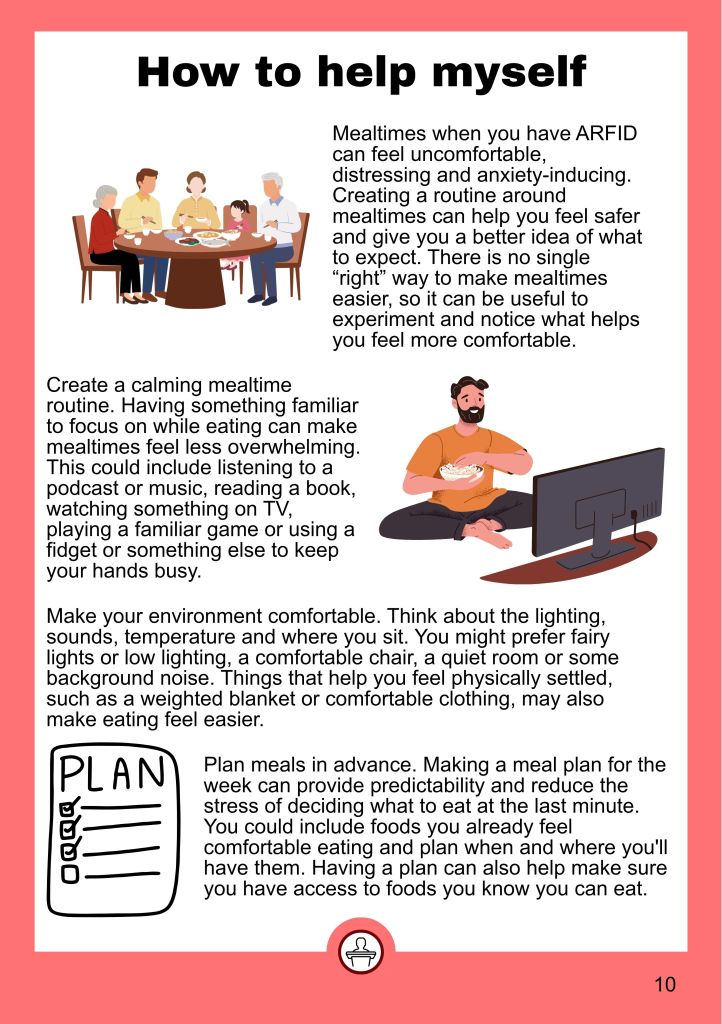
Mealtimes when you have ARFID can feel uncomfortable, distressing and anxiety-inducing. Creating a routine around mealtimes can help you feel safer and give you a better idea of what to expect. There is no single “right” way to make mealtimes easier, so it can be useful to experiment and notice what helps you feel more comfortable.
Create a calming mealtime routine. Having something familiar to focus on while eating can make mealtimes feel less overwhelming. This could include listening to a podcast or music, reading a book, watching something on TV, playing a familiar game or using a fidget or something else to keep your hands busy.
Make your environment comfortable. Think about the lighting, sounds, temperature and where you sit. You might prefer fairy lights or low lighting, a comfortable chair, a quiet room or some background noise. Things that help you feel physically settled, such as a weighted blanket or comfortable clothing, may also make eating feel easier.
Plan meals in advance. Making a meal plan for the week can provide predictability and reduce the stress of deciding what to eat at the last minute. You could include foods you already feel comfortable eating and plan when and where you’ll have them. Having a plan can also help make sure you have access to foods you know you can eat.
Keep food predictable where possible. Changes to familiar foods can sometimes feel difficult. Keeping familiar brands, textures, temperatures or ways of preparing food can help meals feel more manageable. You might also find it helpful to have a safe food available alongside less familiar foods.
Give yourself enough time and reduce pressure. Being rushed, pressured or made to feel guilty about eating can increase anxiety. Give yourself enough time to eat and allow yourself to take breaks when you need them. If a meal feels particularly difficult, talking to someone you trust about what could make it easier may be more helpful than forcing yourself to eat.
Use your safe foods. Safe foods are an important part of managing ARFID and can provide predictability when eating feels difficult. You don’t need to remove your safe foods to make progress. If you’re working towards expanding the foods you can eat, this is best done gradually and with appropriate support from a professional who understands ARFID.
How to help a loved one (for carers)
Supporting someone with ARFID can sometimes feel difficult, particularly when mealtimes are stressful or emotionally charged. As a parent, carer, family member or other person supporting them, you may experience your own feelings of worry, frustration, helplessness or uncertainty. It can help to remember that ARFID is not something your loved one is choosing to do, and that creating a sense of safety around food is often more helpful than pressure to eat.
Work collaboratively to understand what makes eating feel safe for them. This might include identifying their safe foods, preferred textures, temperatures, brands or ways of preparing food. Creating a meal schedule and planning food in advance can also reduce uncertainty around mealtimes. It can be helpful to have a contingency plan for times when things don’t go as expected, such as keeping a familiar safe food available when plans change or a preferred meal isn’t possible. Involving them in decisions about food, routines and their environment can help them feel more in control and increase their sense of safety. Avoiding criticism, threats, bribery or pressure to eat is important, as these approaches can increase anxiety and make eating feel even more difficult.
Mealtimes can become very stressful when everyone is focused on how much someone is eating, whether they are finishing their food or whether they will try something new. Creating a more relaxed environment may involve listening to music, reading, watching TV, having a conversation about a preferred topic or, where appropriate, allowing the person to eat in a separate or quieter space. The aim is to make mealtimes feel as safe and comfortable as possible rather than turning them into a battle.
It can also be helpful to plan for difficult or emotionally charged moments. Think together about what helps your loved one feel calmer and what you can do to regulate yourself when you are feeling worried or frustrated. Taking a pause, using breathing techniques, stepping away for a moment or asking another trusted person to support you can help prevent difficult situations from escalating. Looking after yourself is important too — supporting someone with ARFID can be emotionally demanding, and you deserve support as well.
Comments from relatives, friends or strangers can sometimes be difficult to navigate. It may help to agree on what you and your loved one feel comfortable saying if someone comments on their eating. For example: “We have a GP/therapist/dietitian involved, and they have advised us to do this,” or “We appreciate your concern, but please be respectful.” Having a prepared response can take some of the pressure away from having to explain ARFID in the moment.
Schools may be able to provide a quieter space for meals, allow safe foods to be brought in, make appropriate adjustments around meal times and identify a trusted member of staff the young person can go to if they become overwhelmed. Working collaboratively with the young person, their family and school can help maximise their sense of safety across different environments.
A GP, dietitian, psychologist or other professional with experience of ARFID can help assess their nutritional needs and understand the difficulties affecting their eating. They can also signpost to other specialists where needed. You don’t need to solve ARFID on your own — professional support can help you and your loved one understand what is happening and find an approach that works for them.
How to expand safe foods
Expanding safe foods can feel out of reach at times, but building consistency, predictability and a sense of safety can provide the foundation for experimenting with new foods. The aim is not to suddenly introduce lots of unfamiliar foods or remove someone’s safe foods. Instead, exploring new foods can happen gradually, collaboratively and without pressure, at a pace that feels manageable for the individual. Other ways of increasing safe foods may be through:
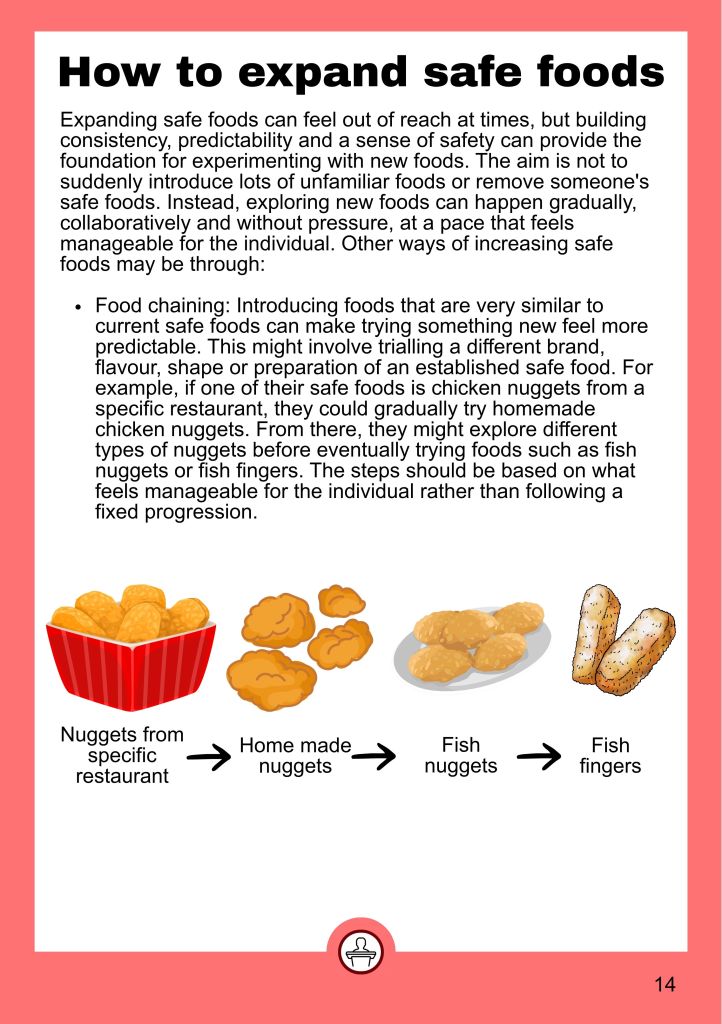
- Food chaining: Introducing foods that are very similar to current safe foods can make trying something new feel more predictable. This might involve trialling a different brand, flavour, shape or preparation of an established safe food. For example, if one of their safe foods is chicken nuggets from a specific restaurant, they could gradually try homemade chicken nuggets. From there, they might explore different types of nuggets before eventually trying foods such as fish nuggets or fish fingers. The steps should be based on what feels manageable for the individual rather than following a fixed progression.
- Sensory exploration: New foods can initially be explored without any expectation that they need to be eaten. Approaching food like a scientist can make this feel less pressured. Someone might first look at the food, notice its colour and appearance, smell it, touch it or explore its texture before deciding whether they are ready to taste it. This allows them to become familiar with the food and understand how it feels to them.
- Success does not have to mean that a new food has been eaten. Looking at, touching, smelling, tasting or having a new food on the plate can all be steps forward. Recognising these efforts can help build confidence and reduce the pressure that comes with feeling like they have to “finish” or successfully eat something for the attempt to count.
- New foods are more likely to feel manageable when someone knows they will not be forced to eat them. Try to avoid using pressure, rewards or consequences to encourage eating. Instead, create opportunities to explore food while allowing the individual to decide what they are comfortable doing at that time.
- Involve your loved one in deciding which foods they would like to explore. They may have particular foods that they are curious about or that feel like a realistic next step. Trying new foods together can also make the experience feel more comfortable and less isolating. You could explore the food together, talk about its smell or texture, or prepare it together.
- Introducing a new food doesn’t mean taking away safe foods. Having familiar foods available can provide a sense of security and make experimentation feel less risky. New foods can be explored alongside safe foods so that the person knows they have something they are comfortable eating.
Therapy
Treatment for ARFID can look different depending on the individual’s age, symptoms, nutritional needs and reasons for avoiding or restricting food. A GP can help refer someone to the most appropriate service. Support may involve one professional or a combination of different specialists.
- Community eating disorder services – Can complete a comprehensive assessment of the reasons behind food restriction, monitor physical health risks and develop structured programmes to support eating and nutritional needs. They may also support families to implement interventions consistently at home.
- Community paediatric services – Occupational therapists, speech and language therapists and dietitians can assess chewing, swallowing, oral motor skills and sensory responses to food. They can support children who gag, choke or struggle with particular textures, and help develop graded plans for introducing new textures.
- Dietetic support – A dietitian can assess whether someone is getting enough energy and nutrients from their current range of foods. They can help families make sure nutritional needs are met while gradually working towards expanding the young person’s diet.
- Occupational therapy – An occupational therapist can assess sensory sensitivities and help develop sensory regulation strategies. They may also support practical difficulties around eating, including tolerating different textures, environments and mealtime routines.
- Speech and language therapy – Where there are concerns around chewing, swallowing, gagging or choking, a speech and language therapist can assess eating and drinking skills and provide appropriate strategies or exercises.
- Health visitors – For children under 5, health visitors can monitor growth, developmental milestones and weight, identify early feeding difficulties and refer on if concerns arise. They can also support parents with mealtimes and help distinguish developmental picky eating from difficulties that may require further assessment.
Therapy may focus on the underlying reasons for food avoidance and restriction, rather than simply encouraging someone to eat more. Psychological support can help someone feel safer around food, manage anxiety and build confidence with eating. The approach will depend on the individual and what is contributing to their ARFID.
- Cognitive Behavioural Therapy (CBT) – Can help someone understand the thoughts, feelings and behaviours connected to food avoidance. It may support them to gradually face food-related fears and develop alternative ways of managing anxiety.
- Exposure-based approaches – Can involve gradually and carefully introducing foods, textures or eating situations that cause anxiety or distress. This should be tailored to the individual and carried out at a manageable pace.
- Anxiety and emotional regulation work – Can help someone manage anxiety, distress and other strong emotions that occur around mealtimes or trying unfamiliar foods.
- Trauma-focused therapy – May be appropriate when ARFID has developed following a frightening or distressing experience, such as choking, vomiting or another traumatic event. Therapy can help someone process the experience and reduce associated fear.
- Family therapy – Can support parents and carers to understand ARFID, improve communication and reduce conflict or pressure around mealtimes. Families can work together to create a more predictable and supportive eating environment.
- Support for co-occurring difficulties – ARFID can occur alongside difficulties such as anxiety, OCD, autism or emetophobia. Therapy may therefore focus on these difficulties as well, as addressing them can make eating and trying new foods more manageable.
Helplines
ARFID Awareness UK
ARFID Awareness UK is a charity dedicated to raising awareness and providing information, advice and support about Avoidant/Restrictive Food Intake Disorder (ARFID). They support people with ARFID, parents, carers and professionals with information about diagnosis, treatment, research and accessing appropriate support.
Email: info@arfidawarenessuk.org
Website: www.arfidawarenessuk.org
Beat
Beat is a charity providing information, advice and support for people affected by eating disorders. They support people experiencing eating disorders and provide support for families, friends and carers.
England: 0808 801 0677
Scotland: 0808 801 0432
Wales: 0808 801 0433
Northern Ireland: 0808 801 0434
Opening times: 3pm–8pm, Monday–Friday
Website: www.beateatingdisorders.org.uk
Childline
Childline is a free service for young people to talk to a counsellor about anything. The service is available 24 hours a day, 7 days a week. Childline is available to anybody who is 18 years old or younger.
Phone: 0800 1111
Opening times: Available 24 hours a day, 7 days a week, 365 days a year
You can also find helpful resources, speak to a counsellor online or send a message on their site.
Website: www.childline.org.uk
For adults concerned about a child, the NSPCC can be contacted
NSPCC
NSPCC is a children’s charity that works to protect children and prevent abuse and neglect. They provide support and advice for adults about child abuse, neglect, child safety, online safety and children’s mental and emotional wellbeing.
Phone: 0808 800 5000
Opening times: 10 am–4 pm, Monday–Friday
Email: help@nspcc.org.uk
Email opening times: 11 am–4 pm, 7 days a week
Website: www.nspcc.org.uk
YoungMinds
YoungMinds is a national charity supporting the mental health and wellbeing of children and young people. They provide information, advice and support for parents and carers who are concerned about a young person’s mental health, and help people understand mental health difficulties, find appropriate support and access useful resources. Their Parents Helpline can provide information, advice, emotional support and signposting to other services.
Parent helpline: 0808 802 5544 (9:30 am – 4 pm on Mondays, Thursdays and Fridays, and from 9:30 am – 6 pm on Tuesdays and Wednesdays)
Email: parents@youngminds.org.uk
Webchat: https://www.youngminds.org.uk/parent/parents-helpline/
Shout
Shout is a free, confidential text messaging service that provides support to anyone who is struggling to cope. It can help with a wide range of issues, including stress, anxiety, low mood, loneliness, relationship difficulties, bullying, self-harm, suicidal thoughts, feeling overwhelmed and other mental health challenges.
Text: SHOUT to 85258
Opening times: Available 24 hours a day, 7 days a week, 365 days a year
Website: www.giveusashout.org
Samaritans
Samaritans is a charity providing emotional support to anyone who is struggling to cope or needs someone to talk to. They are there for people experiencing all sorts of difficulties, including stress, anxiety, loneliness, relationship or family problems, bereavement, feeling overwhelmed and concerns about mental health or suicide.
Phone: 116 123
Opening times: 24 hours a day, 7 days a week, 365 days a year
Website: http://www.samaritans.org